What began as a childhood hobby evolved into something more.
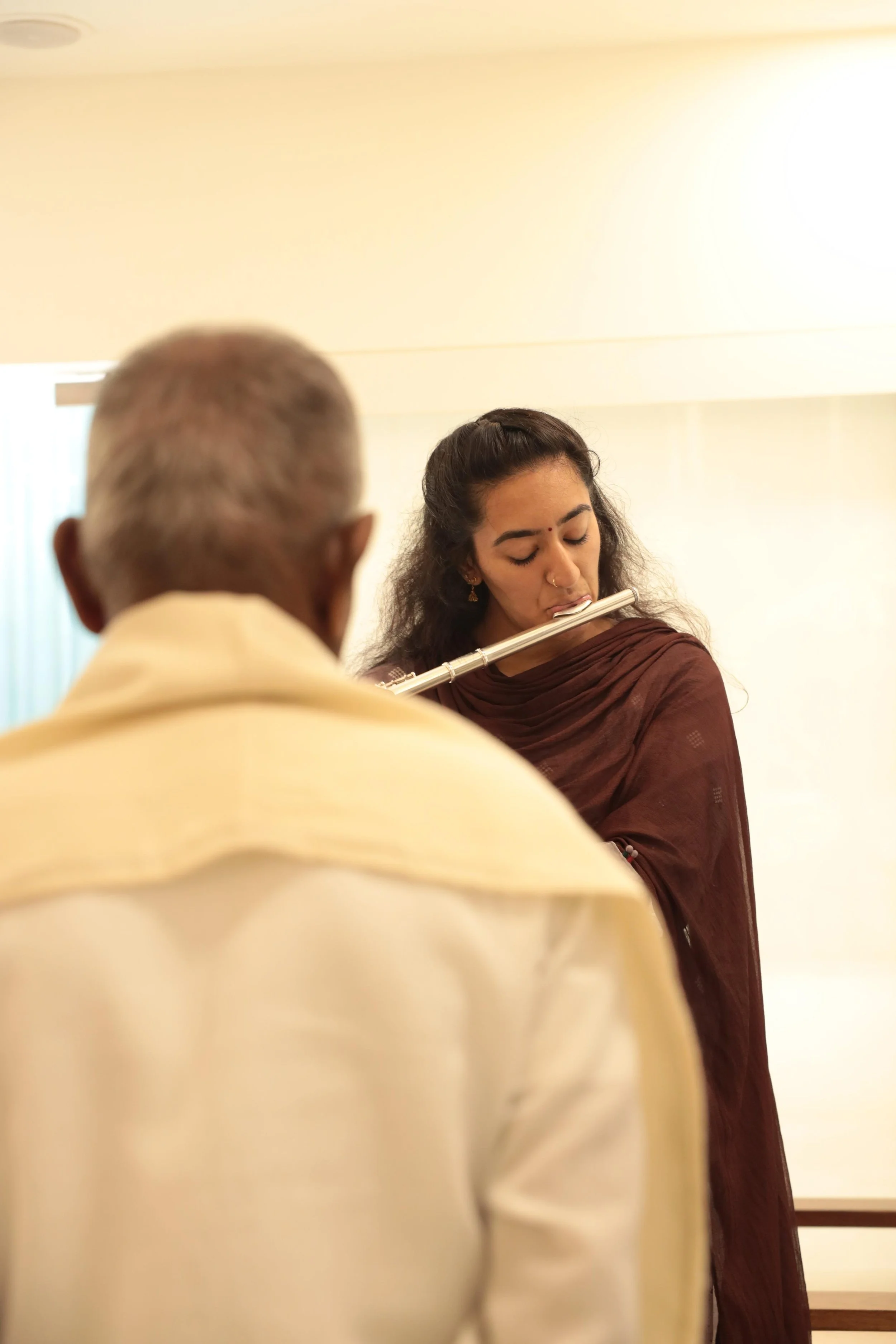
I spent the majority of my childhood singing Carnatic music.
I didn’t always enjoy it, but when I started learning the flute in sixth grade, I started to realize that I already had the ears to understand and fix pitch issues, and could pick up exercises simply by listening.
This can entirely be attributed to my upbringing in South Indian classical music, primarily known as Carnatic music. Carnatic music is taught through oral transmission, or rote learning, which involves teachers singing notes and lyrics to students, and students having to repeat and imitate what is being sung before they receive the notes. This, plus having to constantly sing microtonal raagas (scales) to a tanpura drone both have created a sturdy pitch center both for me, and any students I have that have trained in Carnatic music.
This then brought up the question: how can I incorporate this into Western flute pedagogy?
My dissertation focuses on the incorporation of these skills that are integral to Carnatic music, but are just as important to Western flutists, providing clear cut ways on how teachers and students can add Carnatic exercises into daily practice. I have had multiple interactive clinics across the country working through the step-by-step approach in Carnatic music, having flutists listen and transpose, tune, and decipher intervals within Carnatic raagas.
I’ve linked a packet below, give it a try! The lack of notes or specific direction is intentional, play around with the raaga given, and try out the basic exercises written out to a tanpura drone in g (which can be found on youtube). Then change the tanpura to a different drone, and transpose the notes!
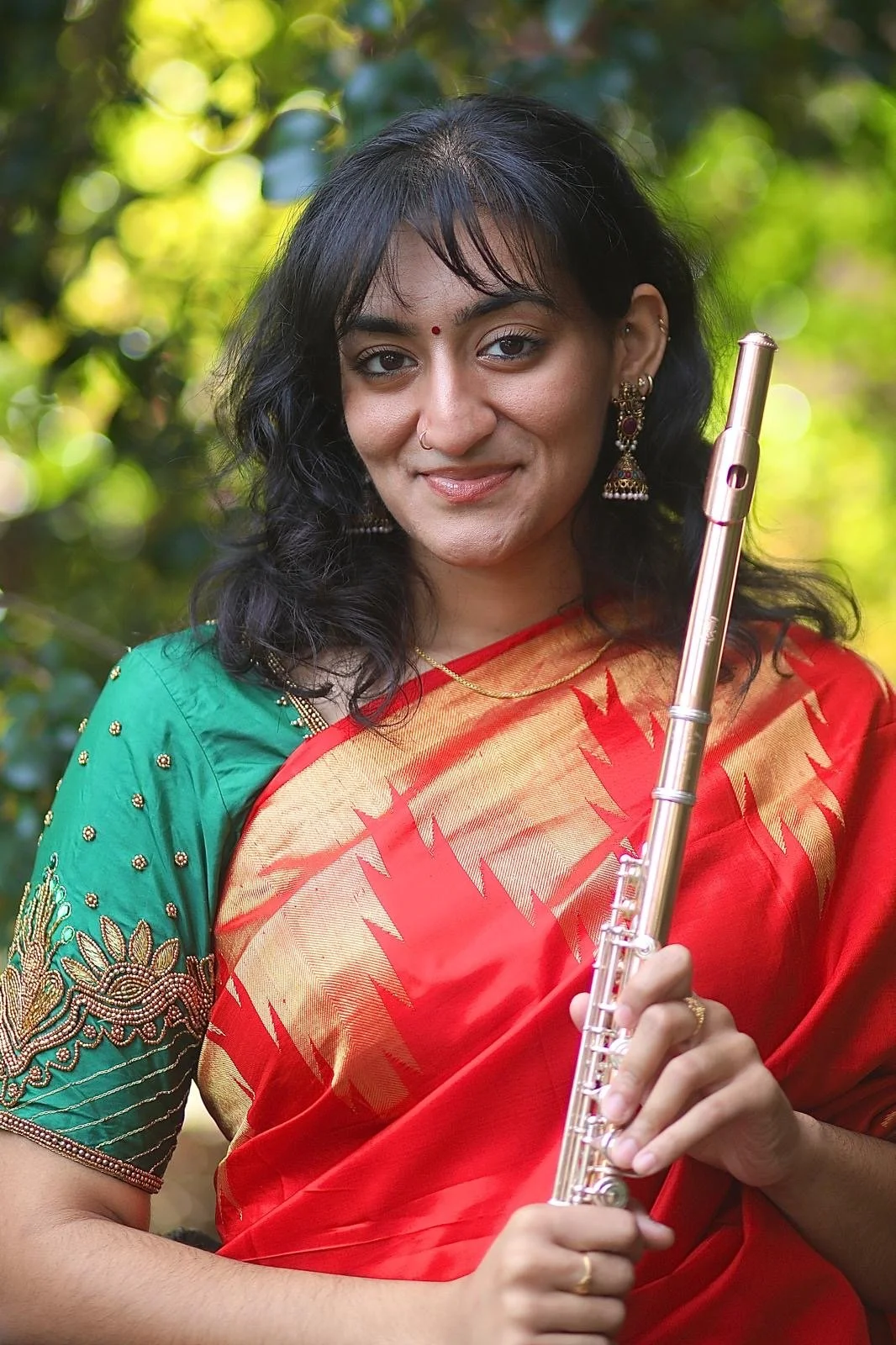
Interested in learning more or having a clinic at your school?
Reach out! I would love to chat.